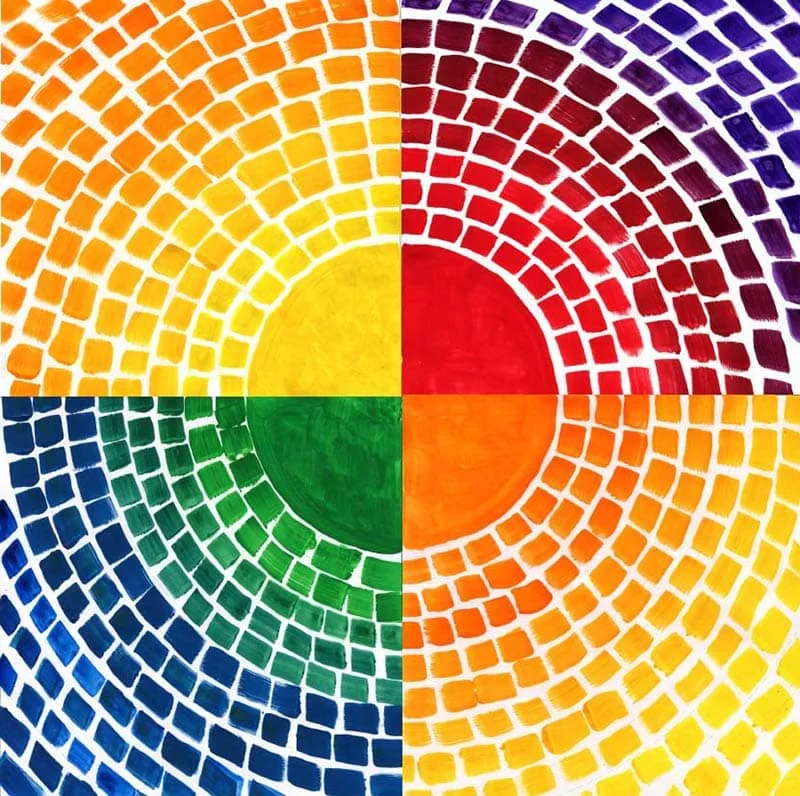
Below you’ll find a step-by-step tutorial for an easy abstract art lesson. It was inspired by the African American artist, Alma Woodsey Thomas, and her love of simple dashed lines.
Alma Woodsey Thomas Art Lesson
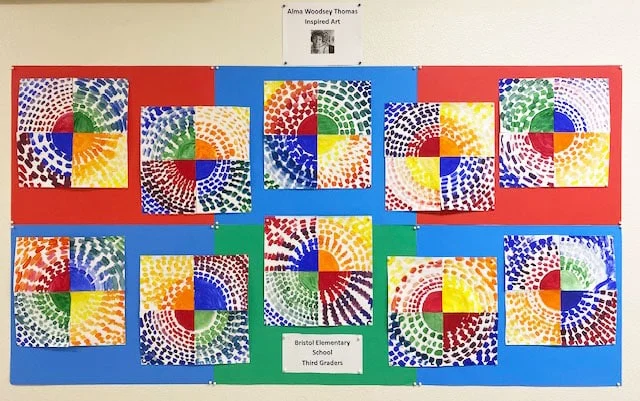
Student Art from Bristol Elementary, Colorado Springs
More about Alma Woodsey Thomas
Alma Woodsey Thomas (1891–1978) was an African-American artist and beloved teacher who lived and worked in Washington, D.C. Today, she’s recognized as one of the most important American painters of the 20th century—especially for the joyful abstract paintings she created after retiring from a 35-year career teaching art at Shaw Junior High School.
Thomas began as a more realistic painter, but her world expanded at Howard University. Her professor, James V. Herring, and fellow artist Loïs Mailou Jones encouraged her to experiment with abstraction and trust her own ideas. Once she retired and could finally devote herself to making art full time, Thomas developed the signature style she’s known for—radiant color, rhythmic marks, and paintings that feel like pure celebration. She first exhibited her abstract work at Howard University in 1966, when she was 75 years old. (If you’d like to read more about her life and work, the National Museum of Women in the Arts has a wonderful overview.)
An Alma-Inspired Abstract Painting for Kids
This easy abstract painting project invites students to work the way Thomas did: build a bold design with simple shapes and fill it with colorful, expressive brushstrokes.
Students start by painting a quarter circle, then add a series of short, dashed strokes that “grow” outward from the curve. The fun twist is in the color: the tutorial shows students how to experiment with color mixing so one hue gradually shifts into another—like a gentle rainbow effect made from their own paint blends.
For younger artists (or anyone who just wants to focus on painting), there’s also a printable template guide. The light guide removes the guesswork, so students can concentrate on what matters most: careful strokes, repeating marks, and exploring color through stripes—just like Alma.
And here’s a bonus: if teachers print and use both the right and left template guides included in the download, the finished paintings can be combined into one beautiful collaborative artwork. It’s an easy way to create something big, colorful, and gallery-worthy—one brushstroke at a time.
Subscribe to “The Daily Draw” below to get this tutorial!
Left and Right Painting templates in the download
-
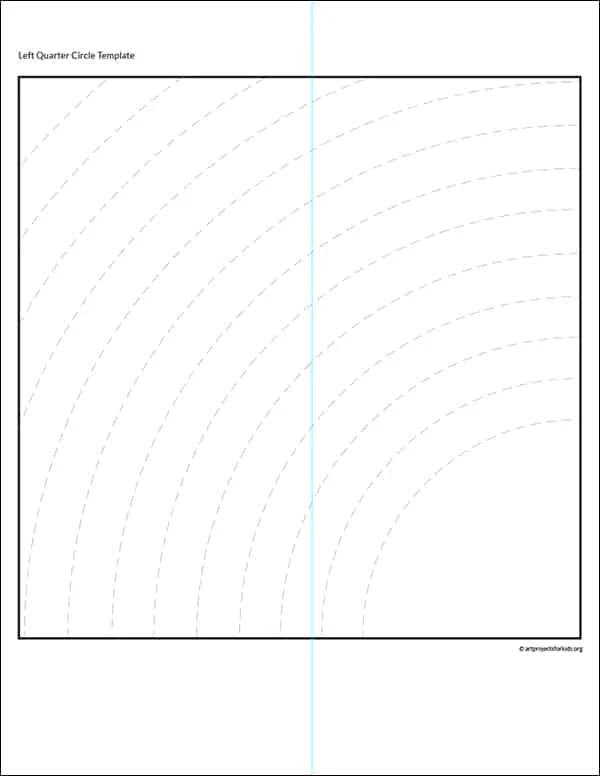
Left Circle Template -
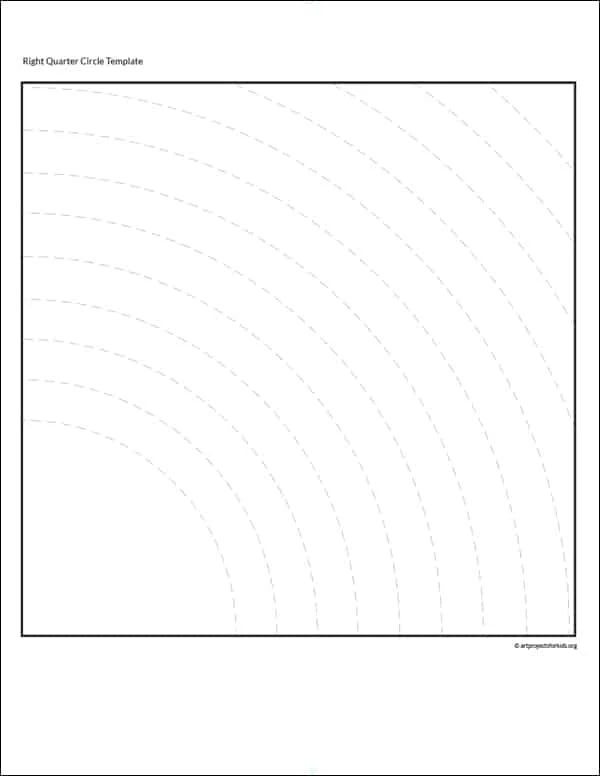
Right Circle Template
Materials for an Abstract Art Lesson
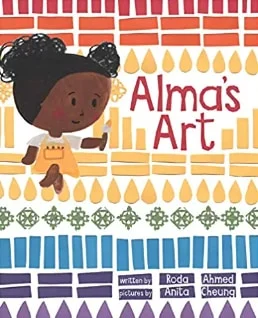
- Suggested Book: Alma’s Art* by Roda Ahmet
- Multimedia Paper* You need something heavier than drawing paper for painting projects
- Printed quarter circle template (page 3 and 4 of download)
- Tempera Paint* A simple set of primary colors and white will provide lots of possibilities. Affiliate link.
- Flat paint brush* A flat end will make the best rectangular shapes when you paint.
- Paper Plate for mixing color
- Water to clean the brush
- All of the links above are Amazon affiliate links.
Step by Step Directions for Alma Thomas Circles
Time needed: 45 minutes
How to paint an Abstract Art Lesson
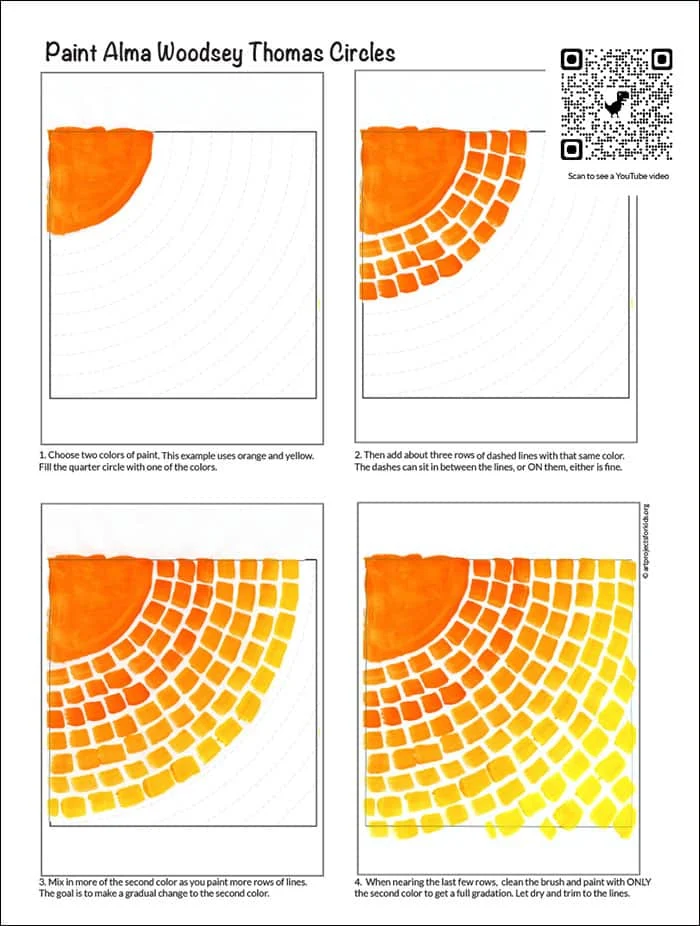
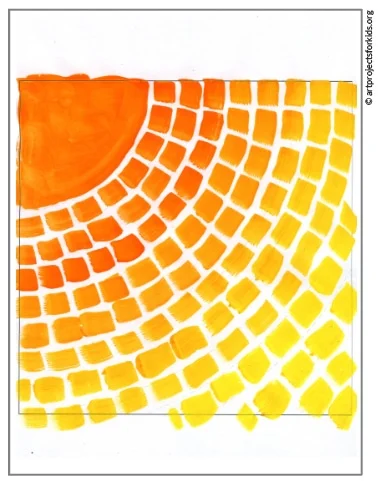
- Choose 2 colors of paint. Fill the quarter circle with one of the colors.
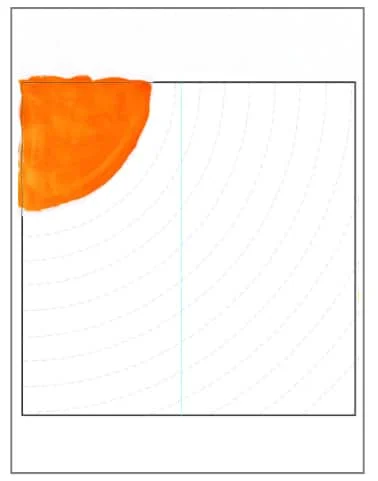
- Paint about three rows of dashed lines with that same color. Use the printed lines as just a general guide.
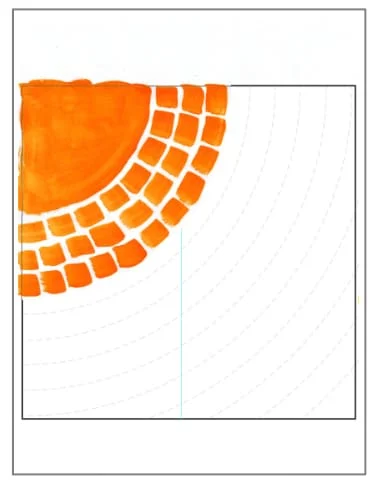
- Mix in more of the second color and paint more rows.
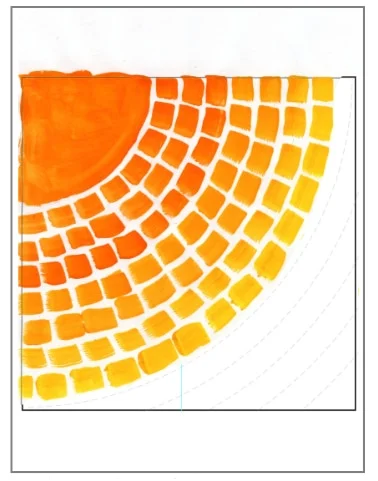
- When nearing the corner, clean the brush and paint ONLY with the second color to get a complete gradation.
Already subscribed to “The Daily Draw”?
Great, then use the button below to get your free Alma tutorial.
And thanks for wanting to bring more step-by-step, no-prep art lessons to your classroom!
Another Alma Woodsey Thomas Project
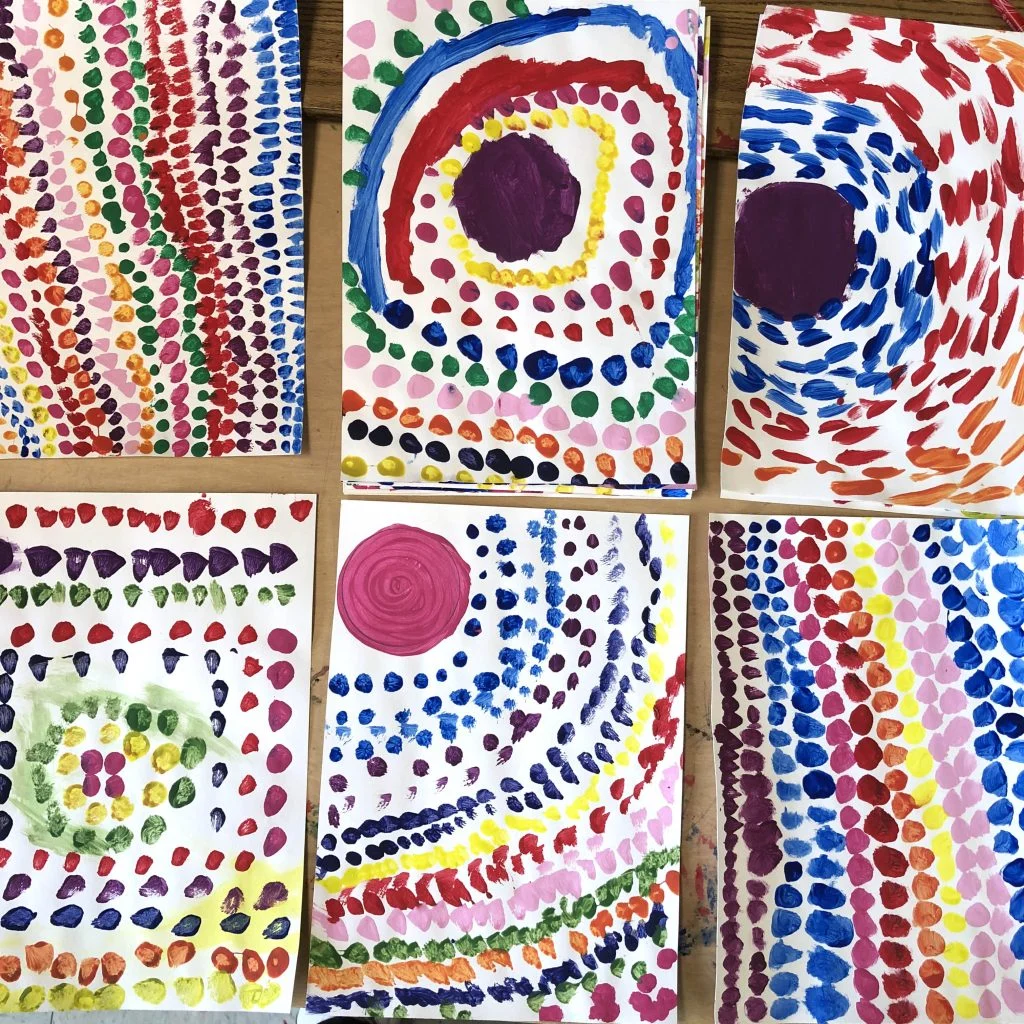
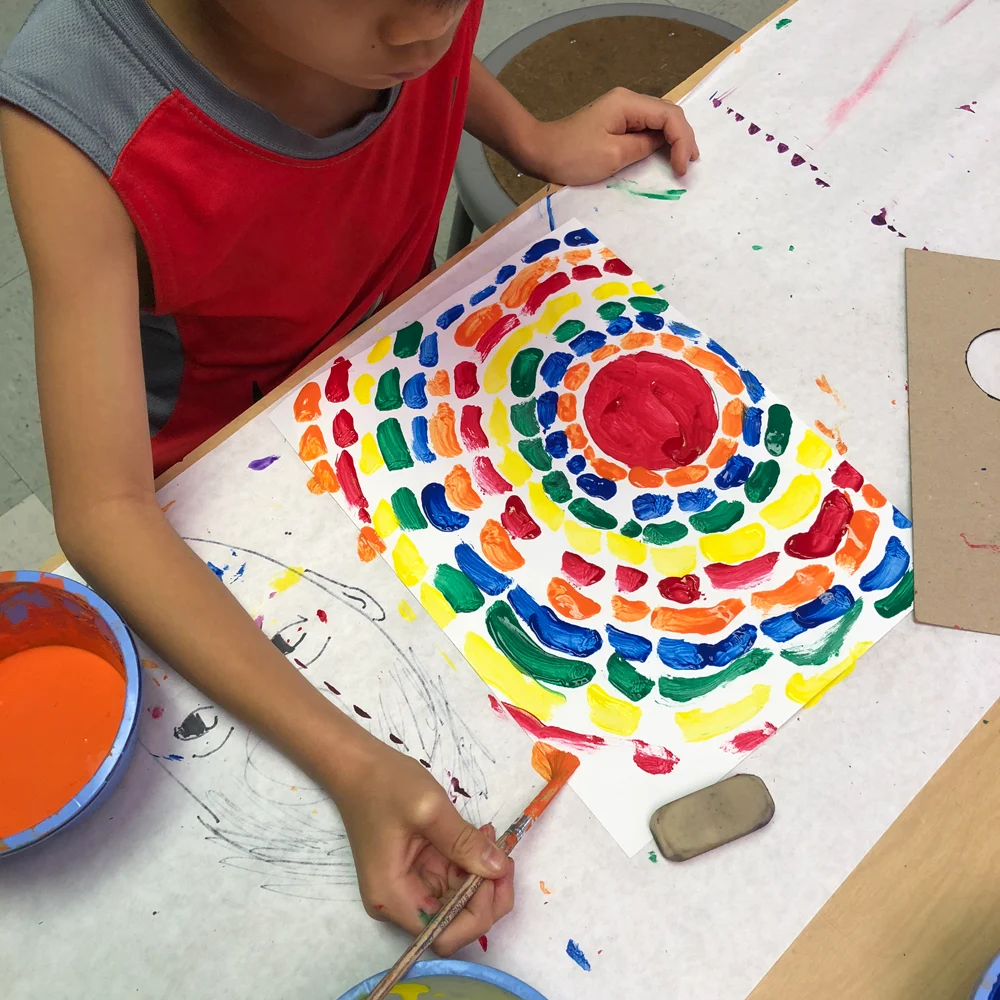
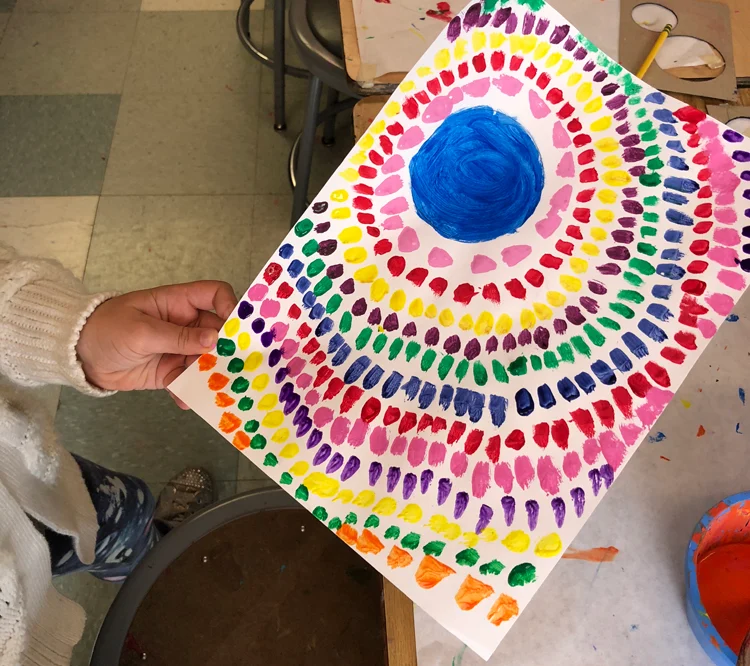
For a more free form project, students can paint a complete circle, and then add dashed lines around it, just the way that Alma did. It might help to have a circle to trace, but after that they can change colors as often or as little as they wish. This works great for journals, and smaller format paper
